Light-Duty vs. Medium-Duty vs. Heavy-Duty Towing: What’s the Difference?
If you’ve ever called a towing company and been asked what kind of vehicle you have, there’s a reason for that question beyond small talk. Not all tow trucks are built the same, and not all vehicles can be towed the same way. Understanding the difference between light-duty, medium-duty, and heavy-duty towing can help you know what to expect when you call for help — and why the right equipment matters more than you might think.
Light-Duty Towing
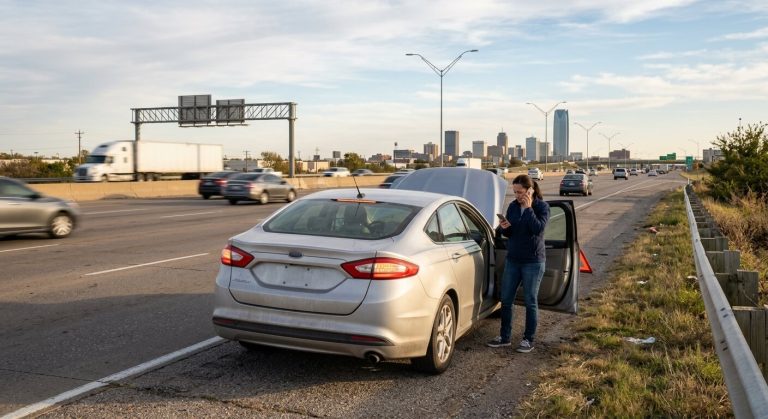
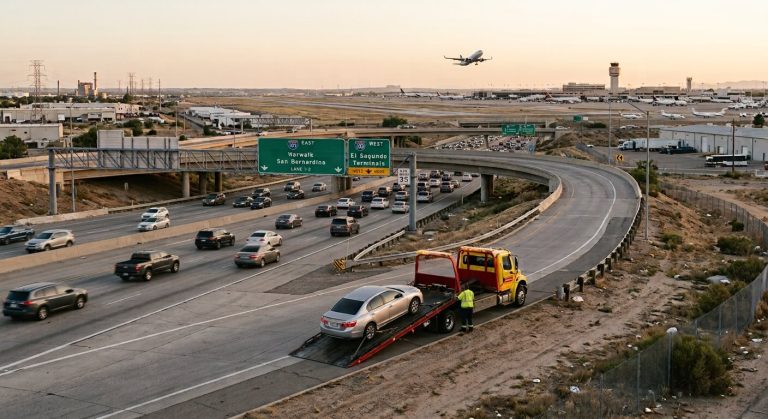
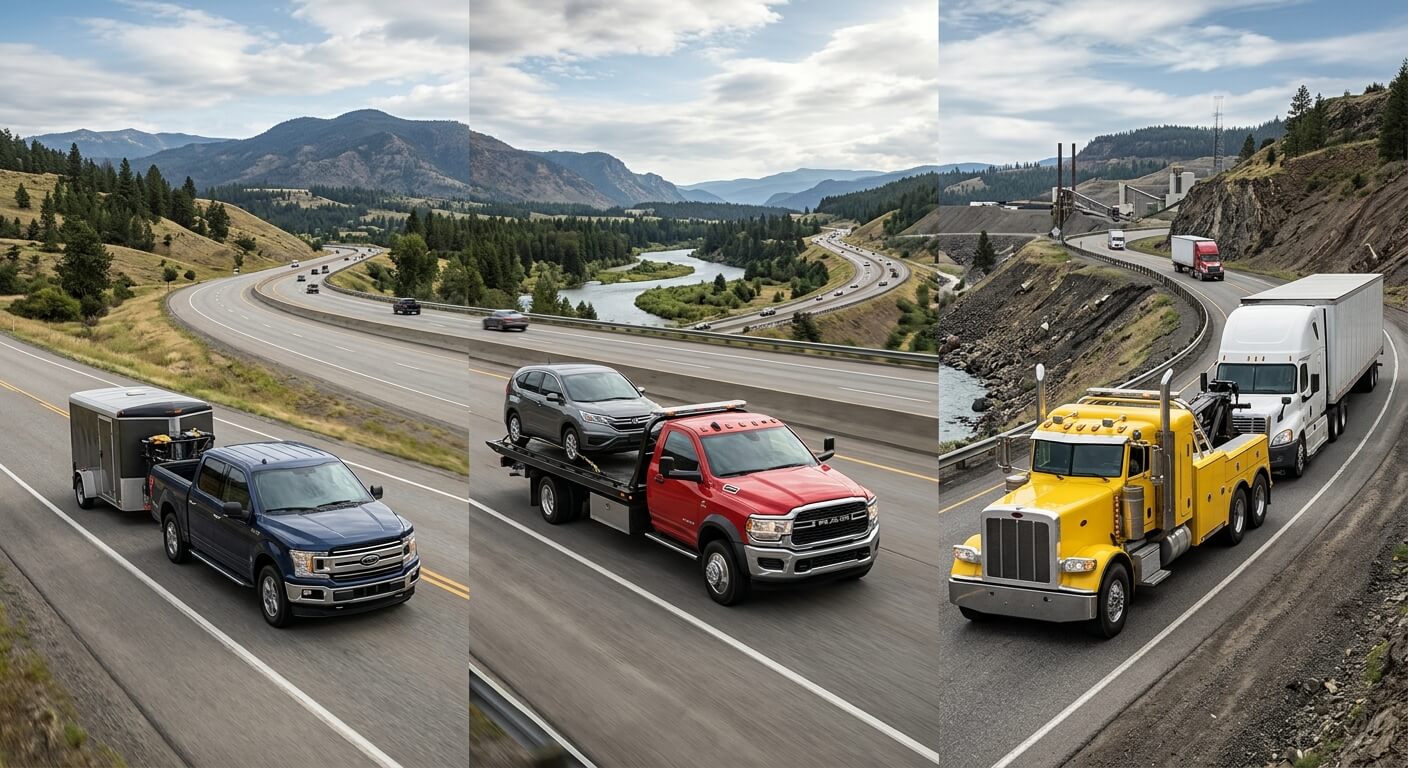
Light-duty towing covers the most common vehicles on the road: sedans, coupes, hatchbacks, small SUVs, compact crossovers, and motorcycles. These vehicles are towed using smaller, more maneuverable trucks, often flatbeds or wheel-lift trucks, that are sized specifically for passenger vehicles.
Because light-duty vehicles are the most frequently towed, light-duty trucks are usually the fastest to dispatch and the easiest to navigate through tight residential streets, parking garages, and busy city traffic. Most day-to-day towing calls — a car that won’t start, a fender bender, a vehicle that needs to be relocated — fall into this category.
Typical light-duty towing situations:
- Breakdowns and mechanical failures
- Accidents involving standard passenger vehicles
- Dead batteries that a jump start couldn’t resolve
- Flat tires without a usable spare
- Motorcycles needing transport
Medium-Duty Towing
Medium-duty towing covers vehicles that are larger and heavier than standard passenger cars, but not quite in the same category as semi-trucks or other heavy commercial equipment. This includes RVs, motorhomes, box trucks, cargo vans, and some larger pickup trucks, especially those towing trailers.
These vehicles need trucks with greater towing capacity and stronger winches than light-duty equipment can provide, along with rigging suited to their size. Medium-duty situations also tend to involve more specialized considerations — an RV’s multiple axles, for example, or a box truck’s cargo load — that a driver needs to account for during loading and transport.
Typical medium-duty towing situations:
- RV and motorhome breakdowns
- Box truck or cargo van mechanical issues
- Business fleet vehicle towing
- Larger pickup trucks with trailers
- Vehicles that are stuck or need off-road recovery
Heavy-Duty Towing
Heavy-duty towing is reserved for the largest and heaviest vehicles on the road: semi-trucks, tractor-trailers, buses, dump trucks, and other large commercial equipment. These vehicles require significantly more towing capacity, reinforced rigging, and specialized training to handle safely.
Heavy-duty situations are often more complex than a standard tow. A jackknifed semi-truck, a rolled-over commercial vehicle, or a bus that’s broken down mid-route all require an experienced operator who understands the added risks involved in moving something this large. Heavy-duty towing isn’t just about bigger trucks — it’s about the skill and precision needed to handle high-stakes recoveries safely.
Typical heavy-duty towing situations:
- Semi-truck breakdowns and accidents
- Jackknifed or rolled-over commercial trucks
- Bus breakdowns
- Dump trucks and construction equipment
- Fleet and commercial trucking vehicles
Why the Difference Matters
Using the wrong type of tow truck for a vehicle isn’t just inefficient — it can be unsafe. A light-duty truck doesn’t have the towing capacity or rigging to safely handle an RV or box truck. Towing a large SUV or truck incorrectly, without accounting for weight and drivetrain, can cause real mechanical damage. And attempting to move a semi-truck or bus without the right heavy-duty equipment and training puts both the vehicle and everyone nearby at risk.
This is why, when you call a towing company, they’ll often ask about your vehicle before dispatching a truck. Sending the right equipment the first time means a faster, safer tow — and it avoids the wasted time of sending a truck that turns out to be the wrong fit for the job.
Not Sure Which Category Your Vehicle Falls Into?
Most of the time, this is straightforward — but a few vehicles sit closer to the line between categories. A large pickup towing a heavy trailer, for example, might need medium-duty equipment even though the truck itself seems like a standard vehicle. If you’re ever unsure, the easiest thing to do is describe your vehicle and situation when you call. A good towing company can quickly determine whether you need light-duty, medium-duty, or heavy-duty service.
Frequently Asked Questions
How do I know if my vehicle needs light-duty or medium-duty towing?
Light-duty towing covers standard cars, small SUVs, and motorcycles. If your vehicle is larger — an RV, box truck, cargo van, or a truck pulling a heavy trailer — it likely needs medium-duty towing. When in doubt, describe your vehicle when you call.
Can a light-duty tow truck tow an RV or box truck?
No. These vehicles are too large and heavy for standard light-duty equipment and require a truck with greater towing capacity and appropriate rigging.
What makes heavy-duty towing different from medium-duty towing?
Heavy-duty towing covers the largest vehicles on the road, like semi-trucks and buses, which require significantly more towing capacity and specialized training, especially for complex situations like jackknifes or rollovers.
Does it cost more for medium-duty or heavy-duty towing?
Pricing varies based on vehicle type, equipment needed, and the specifics of the situation. It’s best to call and describe your vehicle for an accurate quote.
What if I’m not sure which category my vehicle falls into?
That’s common, especially for larger pickups or vehicles towing trailers. Just describe your vehicle and situation when you call, and the towing company can determine the right equipment for the job.
Need Towing in Oklahoma City?
Whether you’re dealing with a standard car breakdown, an RV that won’t start, or a semi-truck that needs heavy-duty recovery, Raymond Towing & Roadside has the equipment and experience to handle it. We proudly serve Oklahoma City, OK, and the surrounding area.
Call us now at (405) 876-6854 and we’ll get the right truck headed your way.